Key B-52 upgrades face cost, schedule risks: GAO
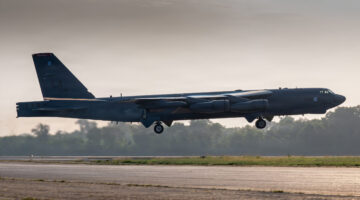
A new audit from the Government Accountability Office found concerns with the Air Force’s modernization of the B-52 Stratofortress, which is planned to fly through the middle of the century.
A new audit from the Government Accountability Office found concerns with the Air Force’s modernization of the B-52 Stratofortress, which is planned to fly through the middle of the century.

A program to upgrade the radar for the Eisenhower-era bomber suffered a tragic setback after a fatal crash in California.

AI is reshaping the Army’s approach to cyber, electronic warfare and command and control. At TechNet Augusta 2026, leaders outlined how they’re turning emerging technology into capabilities for the battlefield.

The Government Accountability Office’s annual weapon system assessment also found that the Air Force is moving to field a hypersonic attack cruise missile in 2027, despite delays driving a compressed flight testing schedule.

A separate Boeing project to integrate a new radar on the B-52 Stratofortress bomber has also suffered a cost breach, said Air Force official Darlene Costello.
The company is expected to produce over 600 engines to breathe new life into the Air Force’s B-52 fleet, now expected to fly well into the 21st century.
The pricetag to put new engines on the decades-old bomber has jumped from $12.5 billion to $15 billion, while an effort to integrate a new radar has climbed to $3.3 billion from an original forecast of $2.3 billion, service officials revealed.


A decorated combat aviator and biotech CEO advocates preparing for novel viral threats before the next crisis.
“There's a lot that can go wrong on the program management side,” Col. Louis Ruscetta, senior materiel leader of the B-52 division, said of the bomber's upcoming modernization. “We have to try to manage and reduce what can go wrong."

Rolls-Royce beat out General Electric and Pratt & Whitney, the latter of whom produced the TF33 engines currently used on the B-52.

A contract for one of three companies is "imminent," per top Air Force officials.

Darlene Costello, acting Air Force acquisition head, has issued a guidance document, called the Digital Building Code, for implementing the service's ambitious digital revolution.

Traditional thinking about how to protect facilities must adapt to new threats such as drones or downstream attacks.

Rolls-Royce, GE Aviation, and Pratt & Whitney have invested hundreds of thousands of hours of digital engineering on the podded mount for the digital engines to virtually attach to the bomber's wing, as well as on other tests such as understanding airflow properties of the aircraft.


With hundreds of thousands of hours of digital engineering work done, Rolls-Royce is well ahead of schedule for the F130 engine development.

"Certainly, we're in the in the conversation for the HACM as that gets developed," Global Strike Command head Gen. Timothy Ray said.

Combatant Commanders for European Command and Indo-Pacific Command see bombers with hypersonic capabilities as "incredibly, incredibly valuable," says Gen. Timothy Ray.